
Why Basements Leak
Water at the floor and wall joint
Hydrostatic pressure pushes water through the cove joint.
Efflorescence on walls
White mineral powder shows moisture moving through block or concrete.
Cracks that weep
Foundation cracks let water in after rain or thaw.
Musty smell
Humidity or hidden moisture.
Damp after storms only
Grading, gutters or downspouts discharging near the foundation.
Start With the Cheapest Fixes
Before spending on drains, fix what channels water to the foundation: extend downspouts at least six feet from the house, grade soil to slope away and clean gutters. These steps often reduce or end minor seepage.
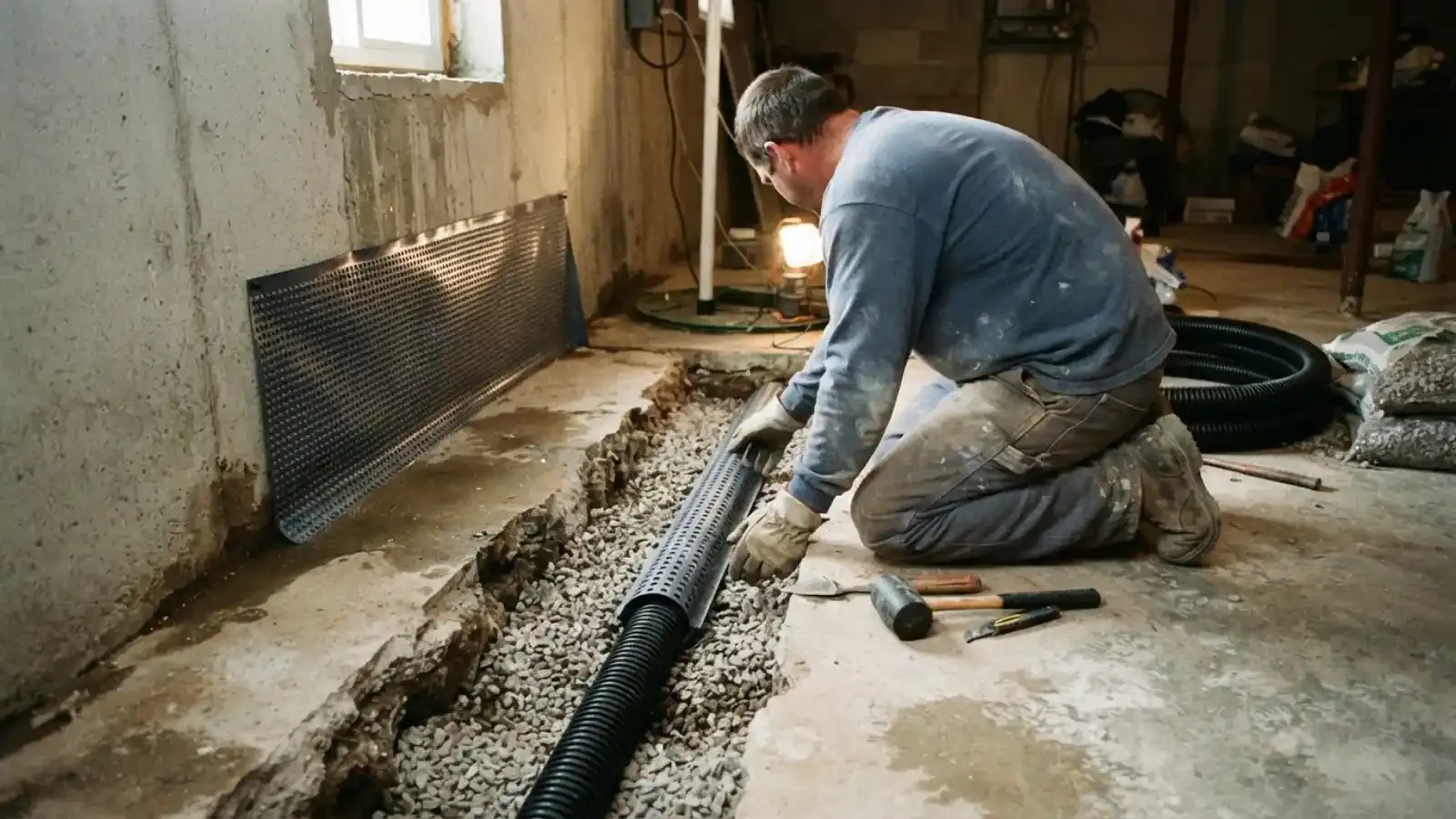
If water still enters, interior drainage and a sump system relieve pressure. A sump pump with a battery backup is the safety net.
| Fix | Best for | Relative cost |
|---|---|---|
| Downspouts and grading | Seepage after rain | Low |
| Crack injection | Single cracks | Low to medium |
| Interior drain tile and sump | Water at the floor-wall joint | Medium to high |
| Wall sealing and vapor barrier | Dampness and humidity | Low to medium |
| Exterior excavation | Severe wall failure | High |
Inspect and diagnose
We look for the entry points and measure moisture.
Choose the fix
We explain options from low-cost to full systems.
Install
Drain, sump and sealing are installed and tested.
Test
We run water to confirm the system works.
How We Find Where the Water Is Coming From
We start with when the water shows up. Water that appears during a heavy rain points to grading, gutters or the wall. Water that appears in spring thaw or after a week of rain points to groundwater and hydrostatic pressure. Water that appears with no weather link may be a plumbing leak, which is a different job.
A moisture meter, a look at the floor-wall joint and a walk around the outside of the house tell us most of what we need before we recommend a fix.
Dampness Is Not Always Leaking
A basement can feel damp with no liquid water. Warm humid air meeting cold concrete forms condensation, and a dehumidifier plus a vapor barrier solves that more cheaply than a drain system.
We tell you honestly when your problem is humidity and not water entry, and we do not sell a drain system you do not need.
Basement taking on water?
Call and tell us when and where. We will give you a clear plan and price.
Basement Waterproofing Cost
The cheapest way to waterproof a basement is to fix grading and downspouts first, which can cost very little. Interior drain and sump systems commonly run from about $3,000 to $10,000 or more in typical US pricing, depending on length. Price depends on:
Insurance rarely covers seepage or groundwater. Sudden pipe failures are different. Check your policy and any water backup rider.
Groundwater, River and Thaw in Chaska
Chaska sits near the Minnesota River, and Highway 41 toward Shakopee has closed at times for river flooding, a reminder of how high the water can get in spring. Rapid thaw plus rain loads soil around foundations.
Sump water in Chaska must be discharged outside. The City says it cannot go into the sanitary sewer. Plan the discharge route before choosing a system.
Any sump or drain tie-in is plumbing work under the Minnesota Plumbing Code, which follows the Uniform Plumbing Code (UPC) and requires traps, vents and accessible cleanouts to be built to standard.
Source: City of Chaska sanitary sewer guidance and regional flood reports.
Basement Waterproofing Questions in Chaska
For active flooding from a failed pump or pipe, yes. We take after-hours calls. Waterproofing itself is planned work.
Fix the outside first: extend downspouts, correct grading and clean gutters. If water still enters, add interior drainage.
It manages water that reaches the floor-wall joint and sends it to the sump. It does not keep the soil outside dry.
Most interior systems take one to three days.
A dry basement is usable space and easier to sell, but we do not promise a specific return.
Plumbing work such as sump and drain connections may require a permit in Chaska. We handle it.