
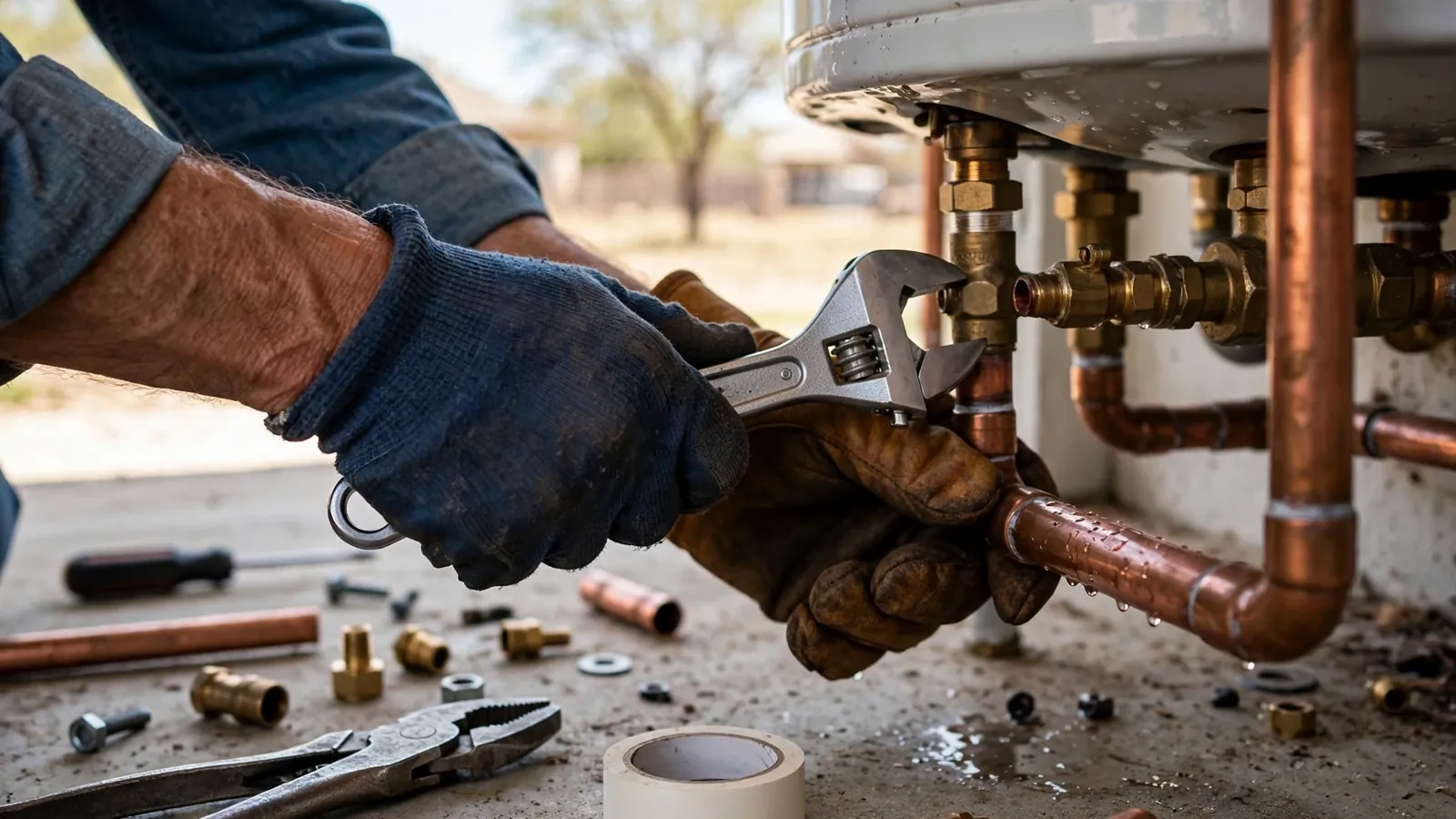
What the Thermocouple Does
The thermocouple generates a tiny electric current when its tip is heated by the pilot flame. That current holds a magnet in the gas valve open. If the flame goes out, the current stops, the magnet releases and the gas shuts off.
It is a safety device. A heater without a working thermocouple cannot be allowed to run, because gas could keep flowing with no flame.
Signs of a Bad Thermocouple
Pilot lights, then goes out
You hold the button, the pilot lights, but it dies a few seconds after you release.
Pilot flame is weak or yellow
A dirty pilot tube or a weak flame fails to heat the tip.
Tip is bent or coated
Soot or corrosion on the tip lowers its output.
No hot water, pilot is out
The most common first symptom.
Before replacing the part, check for a draft blowing out the flame and clean the pilot tube. A clogged pilot orifice can mimic a bad thermocouple.
How It Is Replaced
Turn the gas control to off
Wait at least five minutes for any gas to clear.
Remove the burner access cover
Take the panel off to reach the pilot assembly.
Unscrew the old thermocouple
Loosen the nut at the gas valve and the bracket at the pilot.
Install the new one
Seat the tip in the pilot flame path and hand-tighten the nut a quarter turn past snug.
Relight and test
Follow the label on your heater, and check for gas smell.
Thermocouple, Thermopile and Flame Sensor: Which Do You Have?
Older gas heaters with a standing pilot use a thermocouple. Some use a thermopile, which is several thermocouples in series and produces enough voltage to run the gas valve. Newer heaters often have no pilot at all and use electronic ignition with a flame sensor.
If your heater has an igniter button and no flame to see, a replacement thermocouple is the wrong part. Match the part to the heater label, which lists the model and the gas valve type.
Why Sediment Makes Pilot Trouble Worse
Scale and sediment collect on the bottom of the tank and insulate the burner chamber. The burner then runs longer, soot builds on the pilot assembly and the flame gets weaker.
Draining a few gallons from the tank drain valve each year slows that buildup. If the water coming out looks like gravel or sand, the tank is carrying a heavy load of sediment, and a plumber should look at it.
Safety Rules for Relighting
Wait before relighting
Give any gas five minutes to clear before you strike a flame.
Smell first
Check near the floor, since propane sinks, and near the burner area. Any gas smell means leave.
Keep your face back
Light the pilot with the access cover in the position the label shows and keep your face away.
Never bypass the safety
Do not wire around a bad thermocouple. It is the only thing stopping the gas.
Quick Troubleshooting Table
| What you see | What it usually means | What to do |
|---|---|---|
| Pilot will not light at all | No gas or clogged pilot tube | Check gas supply and clean the tube |
| Pilot lights, dies when you release | Bad thermocouple | Replace the thermocouple |
| Pilot stays lit, no burner flame | Gas valve or thermostat | Call a plumber |
| Pilot blows out in wind | Draft | Check vent and air supply |
| Strong gas smell | Leak | Leave the building and call 911 |
Not comfortable working near gas?
Call and we will diagnose the pilot, replace the part and test the heater.
When to Call a Plumber
If you smell gas, leave the house and call 911 and your gas utility from outside. Do not try to relight a heater when you can smell gas.
Call a plumber if the new thermocouple does not fix the problem or if the pilot assembly is corroded. Call too if the heater is more than ten to twelve years old, or if you are not sure how to relight it safely.
A failing thermocouple in an old heater is often one of several problems. Our water heater repair service checks the burner, venting and tank, and if it makes sense to replace the heater, water heater replacement is the next step.
Cost
The part is inexpensive, typically under $30, while a service visit with labor commonly costs about $150 to $300 in typical US pricing. The cost rises if the gas valve or burner assembly is also bad.
We serve Chanhassen and Waconia as well as Chaska, and we tell you the price before we start.
Hard Water and Chaska Water Heaters
The City of Chaska reports that its water is hard, at 26 grains per gallon in the 2025 drinking water report. Scale collects on the tank floor and the burner area, and heavy sediment can smother the pilot.
Flushing the tank once a year reduces sediment. The City also requires a plumbing permit for water heater replacement, which is worth knowing if your repair turns into a swap.
Gas water heater work follows the manufacturer's instructions and the Minnesota Plumbing Code, based on the Uniform Plumbing Code (UPC).
Source: City of Chaska 2025 Drinking Water Report and plumbing permit information.
Questions Chaska Homeowners Ask
Many handy owners do, using a universal kit. If you smell gas, are unsure or the heater is old, call a plumber.
A draft can blow it out, or a weak flame fails to heat the thermocouple. Check the vent and the air supply.
Often five to ten years, but hard water and soot can shorten it.
Yes. Leave the building and call 911 and your gas utility from outside.
Chaska requires permits for plumbing repair and replacement, including water heaters. Ask the City inspections office at 952-448-9395 whether a specific repair needs one.
If the tank is over ten to twelve years old, leaks or rusts, replacement usually makes more sense.