No Heat: What to Check Before You Call
Thermostat
Confirm it is set to heat and above room temperature.
Power
Check the boiler switch and breaker.
Pressure
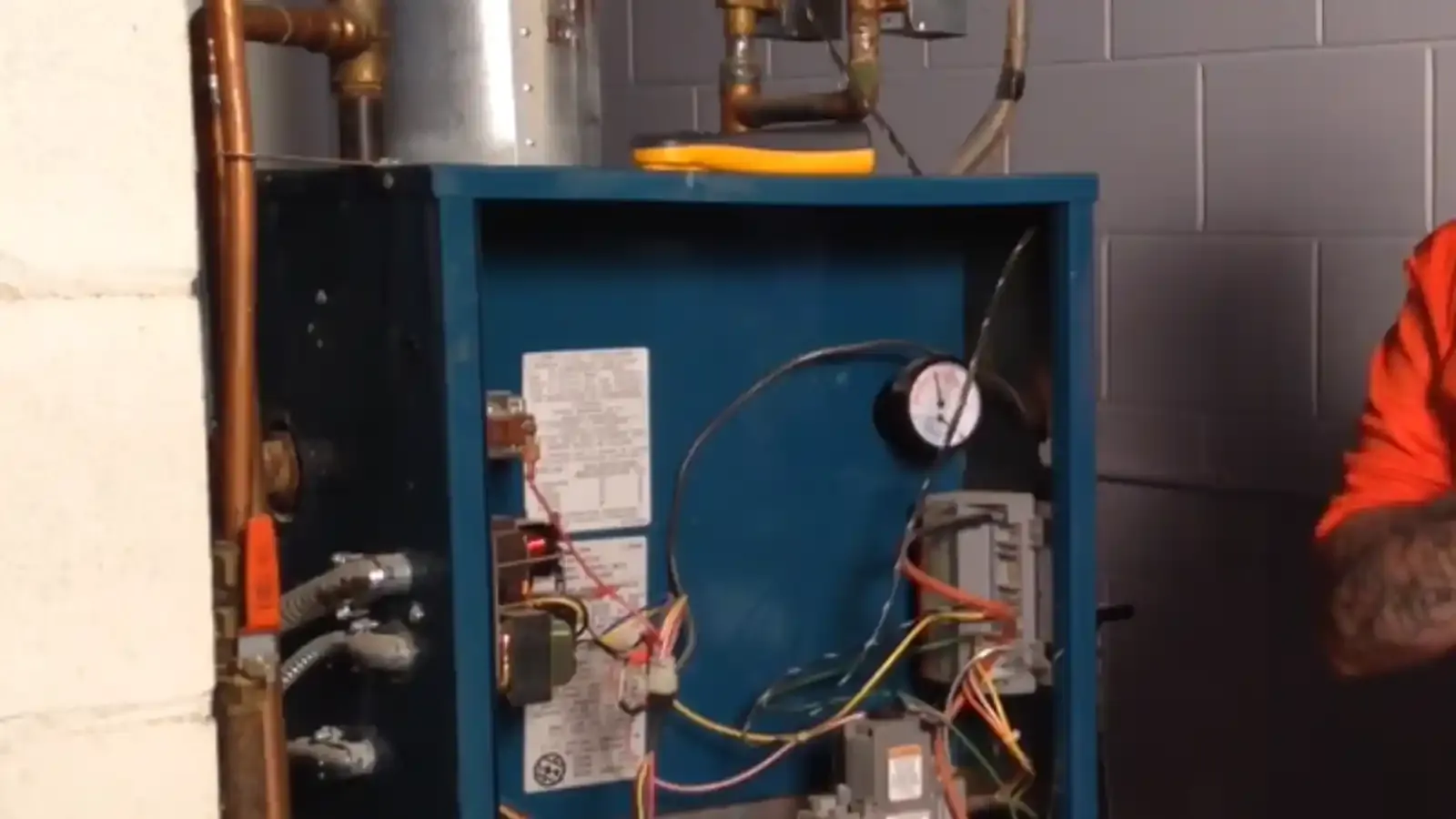
A cold boiler usually reads between 12 and 15 psi. Low pressure can lock it out.
Gas
If other gas appliances work, the supply is likely fine.
Safety
Never ignore gas smells or carbon monoxide alarms.
If the reset button is lit or the display shows an error code, write down the code. Do not press reset more than once, since repeated resets can flood the burner with gas.
Call us with the brand, model and code. We will tell you what the code usually means and plan a visit.
Common Boiler Faults
Ignition failure
A dirty flame sensor or electrode keeps the burner from lighting.
Low pressure
A leak or failed expansion tank.
Kettling or banging
Scale or sludge on the heat exchanger.
Leaks
From a pump seal, valve or the heat exchanger.
Radiators cold at top
Air trapped in the system needs bleeding.
| Symptom | Likely cause | Typical outcome |
|---|---|---|
| No heat, error code | Flame sensor or ignition | Clean or replace part |
| Pressure drops | Leak or expansion tank | Repair leak, replace tank |
| Noisy boiler | Scale or air | Flush, bleed system |
| Water on the floor | Valve or pump seal | Replace part |
Annual Service and Carbon Monoxide Safety
A yearly tune-up checks the burner, flame sensor, venting, pressure, expansion tank and safety controls. It catches small faults before the first cold night and keeps combustion clean.
Every home with a gas boiler should have working carbon monoxide detectors on each level and near sleeping areas. A detector alarm means leave the house and call 911, not reset and wait.
If your boiler also feeds in-floor or baseboard zones, tell us which zones are cold. A single cold zone points to a zone valve or a trapped air pocket, while a whole-house failure points to the boiler or its controls.
Boiler down and the house cooling?
Call now with the brand and what you see. We will tell you what to try and plan a visit.
Boiler Repair Cost
Common boiler repairs commonly run from about $200 to $900 in typical US pricing, depending on the part. A heat exchanger failure or a very old boiler can mean replacement. What changes it:
Boiler repairs from wear are not insurance claims. A sudden burst or leak that damages the house may be covered.
Heating a Chaska Home in Winter
Hydronic heat with a boiler, radiators or in-floor tubing is found in many Minnesota homes, and a failure in January can freeze plumbing within a day if the house cools. Keep the thermostat above 55 degrees and open cabinet doors on exterior walls.
If your boiler also feeds your hot water, see water heater repair. Burst pipes after a freeze are handled by burst pipe repair.
Boiler piping, relief valves and drains are installed under the Minnesota Plumbing Code, which is based on the Uniform Plumbing Code (UPC), so repairs are done to that standard.
Source: General Minnesota winter heating practice.
Boiler Repair Questions in Chaska
Yes. A no-heat call in winter is an emergency and our line is answered 24/7. We cannot promise a fixed arrival time but we help you keep the pipes safe while we dispatch.
A cold residential boiler is typically 12 to 15 psi. Check the manual for yours.
Usually scale or sludge, trapped air or low water. A flush and bleed often fixes it.
If the heat exchanger is cracked or parts are unavailable, replacement may be better. We explain both.
We service most common residential brands. Tell us the brand and model when you call.
Annual service keeps it efficient and safe. We can schedule tune-ups.