
Signs Your Pipes Need Replacing
Repeat pinhole leaks
A second or third pinhole in the same system means other sections are thin.
Rusty or brown water
Galvanized steel rusts from the inside and sheds iron.
Low pressure at several fixtures
Mineral and rust buildup narrows old pipe.
Visible corrosion
Green crust on copper or flaking orange on galvanized.
Water stains on ceilings
Slow leaks hidden in walls.
PEX or Copper: How We Choose
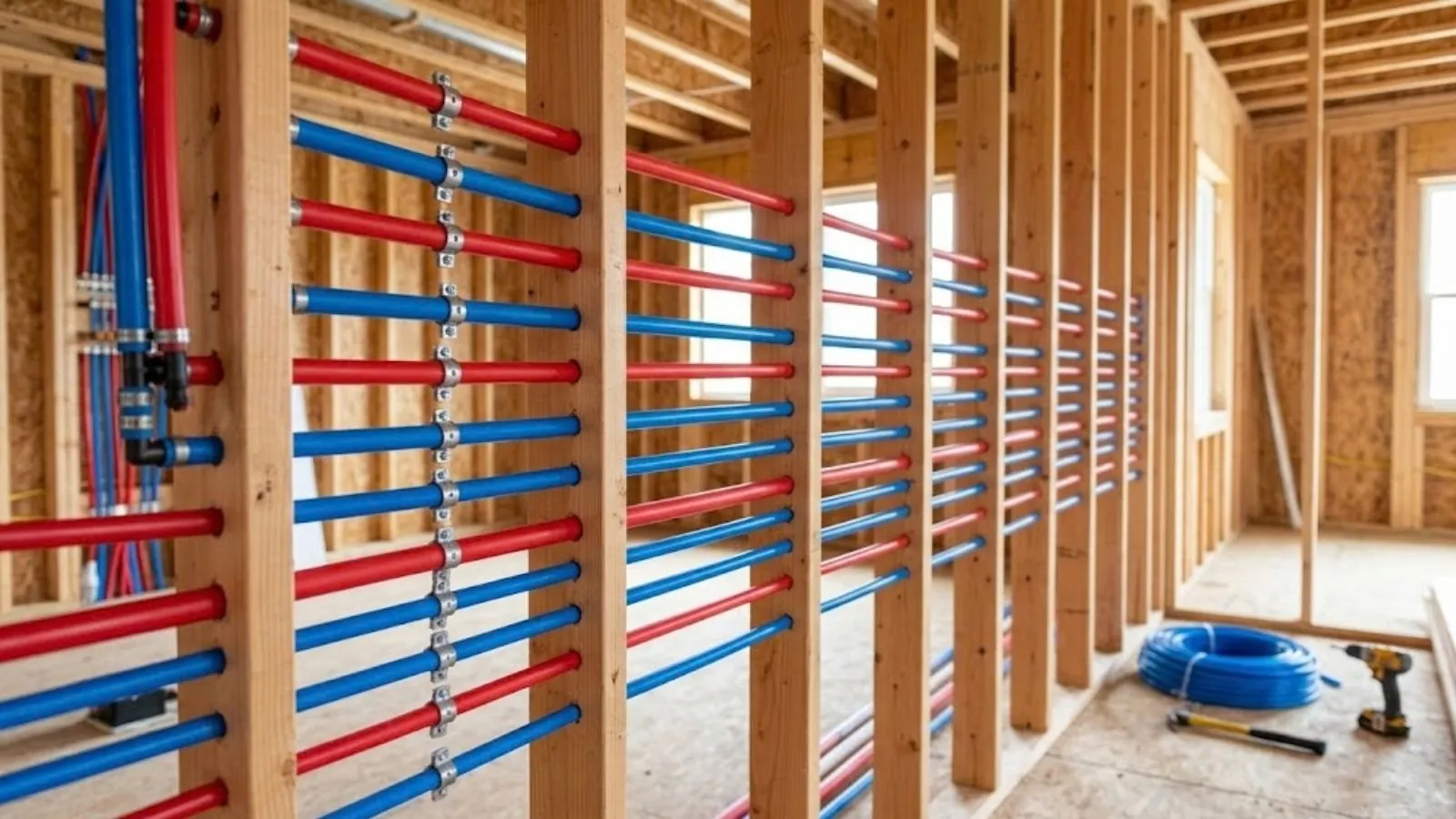
PEX is flexible, resists freeze damage better than rigid pipe and can be run through walls with fewer openings, which keeps drywall repair small. Copper is long-lasting and has no plastic in it, which some owners prefer.
We explain the tradeoffs for your house, and we use whichever the home and budget suit. Both meet the Minnesota Plumbing Code.
| Pipe | Typical life | Notes |
|---|---|---|
| Galvanized steel | 40 to 60 years | Corrodes inside, replace |
| Copper | 50+ years | Pinholes from water chemistry or age |
| PEX | 40 to 50 years | Flexible, quick to install |
| CPVC | 25 to 40 years | Can become brittle |
Survey the system
We trace the pipes, check pressure and identify the failing sections.
Write the scope
You get a written price for whole house or partial repiping before we start.
Install new lines
We run new lines, often through existing paths, and connect fixtures.
Test and restore
Pressure test, inspection and drywall coordination.
What a Repipe Week Looks Like
On day one we set up protection, shut the water at the main and begin running new lines from the manifold or main. Fixtures are connected one room at a time so water is restored each evening wherever possible.
The final step is a pressure test and inspection. Drywall openings are patched or handed to your drywall contractor, and we leave the system labeled so you know where each shutoff goes.
Considering a repipe?
Call and tell us the house age and what you see. We will tell you what to expect.
Repiping Cost
Whole-home repiping commonly runs from about $4,000 to $15,000 or more in typical US pricing, depending on the size and access. Partial repipes cost less. The price depends on:
Insurance rarely pays to replace pipes that are wearing out. It may cover water damage from a sudden burst.
Hard Water, Permits and Repiping in Chaska
The City's 2025 report lists Chaska water at 26 grains per gallon, so scale is a factor in older systems. The City also reports lead service line inventory results as of late 2025, with no lead lines found and 1,169 services of unknown material still being verified.
Repiping requires a plumbing permit and inspection in Chaska, and we handle both. If you want to check a service line, the City points to a Lead Inventory Tracking Tool at maps.umn.edu/LSL.
New piping is installed under the Minnesota Plumbing Code, which follows the Uniform Plumbing Code (UPC), and is pressure tested and inspected before walls are closed.
Source: City of Chaska 2025 Drinking Water Report and plumbing permit information.
Repiping Questions in Chaska
Yes. A burst pipe is an emergency and our line is answered 24/7. Close the main shutoff and call. For the repair itself, see burst pipe repair.
Most homes take two to five days depending on size. Water is off during working hours and restored each evening where possible.
Usually not, but you will be without water during working hours. Some owners stay elsewhere for a night or two.
We keep openings small and coordinate patching. PEX often needs fewer openings than rigid pipe.
Not always. If the rest of the pipe is sound, repair the leak. If it is the third leak or the pipe is galvanized, replacement is better.
Yes. Repiping requires a plumbing permit in Chaska and we pull it.