
How to Tell If a Pipe Is Frozen
A faucet gives a trickle or nothing
If the hot side works and the cold does not, the cold line is likely frozen.
Frost on exposed pipe
White frost on a pipe in a crawl space, garage or exterior wall is a warning.
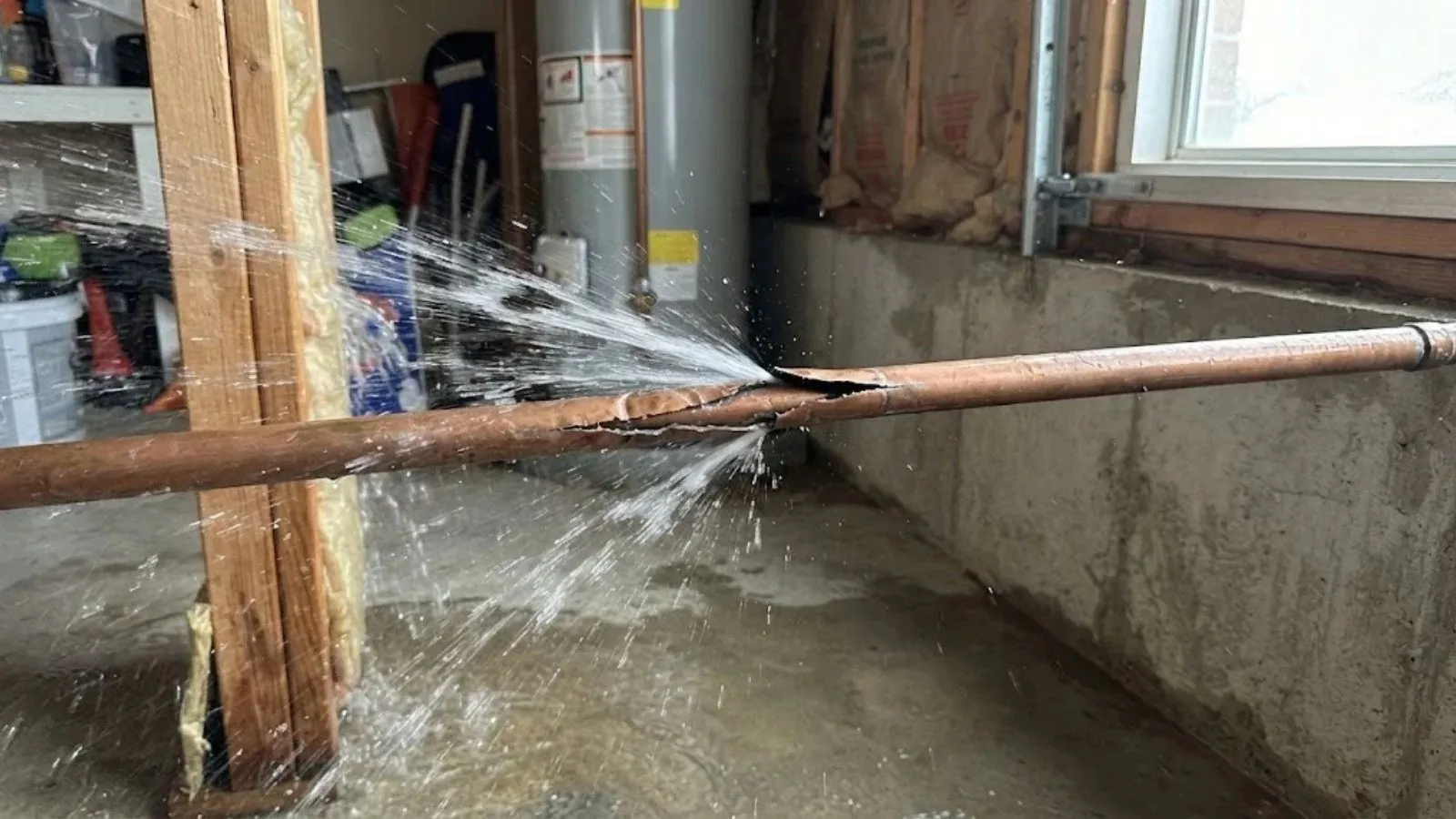
A pipe that bulges or cracks
Ice has stretched the metal. Shut the water now.
Strange smells from a drain
A frozen drain or vent can block gas flow.
Walk through the house and check pipes along exterior walls, under kitchen and bathroom sinks, in the garage and in any unheated space. Pay special attention to places where a pipe enters the house through the foundation wall.
If more than one faucet is affected, the freeze may be in the main line near where it enters the house.
How to Thaw a Frozen Pipe Safely
Open the faucet
A small stream relieves pressure and shows when water starts to move.
Warm the pipe slowly
Use a hair dryer, heating pad or warm towels, working from the faucet back toward the frozen part.
Check for leaks
As the ice melts, look for drips or sprays along the pipe.
Keep warming
Continue until full pressure returns.
Never use flame
A torch, kerosene heater or open flame can ignite framing and damage the pipe.
If you cannot reach the frozen section, such as inside a wall, raise the thermostat and open cabinet doors. If water has not returned after a few hours or you see any leak, call a plumber.
Which Parts of a House Freeze First
Pipes freeze where cold air meets water with no heat to replace what the cold takes. That is usually an exterior wall with thin insulation, an unheated garage, a crawl space vent, a pipe run above an overhang or a water line entering through a foundation wall near an unsealed gap.
Kitchen and bath sinks on north-facing walls are the classic trouble spots. If a faucet there has frozen once, it will probably freeze again until the draft is sealed or the pipe is insulated.
What to Do If the Power or Heat Goes Out
A power outage in a deep freeze can turn a normal house into an icebox in a day. If you lose heat, close off unused rooms, let a thin stream run from the farthest faucets and keep cabinet doors open. If you will be gone more than a day or two, shut the main and drain the lines.
If a boiler stops, see our boiler repair page for quick checks, and call as soon as you can.
Frozen or burst pipe right now?
Call, close the main and tell us what you see. We will tell you what to do next.
If a Pipe Has Burst
Close the main water valve first. Then open the lowest faucet to drain the lines and turn off the water heater to protect it from running dry. If water is near outlets or the electrical panel, stay clear and call.
Move belongings away from the wet area, photograph the damage and call your insurer. Water damage worsens over hours, so quick action reduces mold risk and drying costs.
| Situation | First action | Then |
|---|---|---|
| Frozen, no leak | Open faucet, warm slowly | Watch for leaks as it thaws |
| Burst and spraying | Close the main | Call a plumber and your insurer |
| Frozen drain | Pour hot water carefully | Call if it will not clear |
| Frozen hose bib | Disconnect hose, warm bib | Check for a leak inside the wall |
Prevention Before the Next Cold Snap
Insulate pipes in unheated spaces with foam sleeves, and seal gaps where cold air reaches pipes, such as around rim joists and where cables enter the house. Disconnect garden hoses and, if you have shutoff valves for outdoor faucets, close them and drain the lines.
During a deep freeze, open cabinet doors under sinks on exterior walls, let a thin stream run from a faucet on an exterior wall and keep the thermostat at 55 degrees or higher, even when you are away.
Garage and crawl space
Seal drafts and insulate pipes.
Outside walls
Open cabinets and let warm air reach the pipes.
Vacant or seasonal homes
Keep the heat on or drain the system completely.
Outdoor bibs
Hoses off and valves closed before the first hard freeze.
We help homes in Chaska, Chanhassen and Victoria with frozen and burst lines. If you suspect a hidden leak after a thaw, leak detection pinpoints it without opening walls, and an underground service line freeze is handled by water line repair.
After the Thaw: Watch Your Meter in Chaska
After a freeze, check for a leak you may have missed. The City of Chaska recommends reading your water meter before and after two hours with no water use, and its metering system notifies customers if it detects consumption for four consecutive days.
If the meter keeps moving, call us. For questions about the City portion of the line, the Water and Sewer Department can be reached at 952-448-4335, and Gopher State One Call at 651-454-0002 marks buried utilities before any digging.
Replacement pipe after a freeze is installed to the Minnesota Plumbing Code, based on the Uniform Plumbing Code (UPC), and manufacturer guidelines for insulating pipe in unheated spaces apply.
Source: City of Chaska utility pages.
Questions Chaska Homeowners Ask
Pipes in unheated spaces can freeze when temperatures stay near or below 20 degrees for several hours. Wind and exposure speed it up.
No. Many freeze and thaw without damage, but ice expansion can split a pipe, so inspect after any freeze.
Yes. It reduces pressure in the line and keeps water moving, at a small water cost.
Often, for sudden bursts, though policies can exclude damage from neglect. Call your insurer promptly.
Raise the heat and wait. If water does not return, call a plumber to avoid damage.
There may be a draft or poor insulation near it. Fixing the cause is better than thawing it again each year.