
Step One: Control Water Outside
Gutters
Clean them twice a year so water goes down the downspout, not over the edge.
Downspout extensions
Extend downspouts at least six feet from the foundation.
Grading
Soil should slope away from the wall, about six inches over the first ten feet.
Window wells
Keep covers clear and drains open.
Landscape beds and mulch
Do not let flowerbeds trap water against the foundation.
These fixes cost little or nothing for a motivated owner. They solve many seepage problems, because most basement water follows rain.
Step Two: Seal What You Can See
| Problem | Low-cost fix | Limits |
|---|---|---|
| Hairline crack, weeping | Injection kit or hydraulic cement | Does not stop pressure |
| Damp block wall | Masonry sealer | Fails if water pressure builds |
| Condensation | Dehumidifier and insulation | Not a leak |
| Open floor drain | Check valve or plug | Does not stop groundwater |
Painting a waterproof coating onto a wall is cheap, but it fails when water pressure builds behind it. Use it for dampness, not for active leaks.
Read the Weather Pattern
Note when water appears. Water only after heavy rain points to roof runoff, grading or gutters. Water in spring thaw points to snowmelt pooling or a high water table. Water in dry weather may be a plumbing leak, which is a different problem.
Keep a short log for a season. A few notes with dates and weather give a contractor, or you, a clear picture of the cause.
Window Wells and Entry Points
Window wells fill with leaves and water. A clogged well drain makes the well a bathtub against the glass. Clear the debris, check that the drain at the bottom is open and install a clear cover that sheds rain.
Check other entry points too, such as basement doors, hose bibs and cracked concrete steps that slope toward the house.
A Budget Order With Rough Costs
| Step | Typical cost | Solves |
|---|---|---|
| Clean gutters and extend downspouts | Under $100 | Roof runoff seepage |
| Regrade soil near the wall | Low to moderate | Surface water pooling |
| Crack injection | Low to moderate | Single weeping cracks |
| Sump pump and pit | Moderate | Rising groundwater |
| Interior perimeter drain | Higher | Pressure at the floor-wall joint |
DIY or Hire a Pro
Gutters, downspouts and grading are friendly to DIY. Crack injection kits work for small cracks. Digging along the foundation, installing drain tile and cutting slab are jobs for professionals.
A good contractor tells you which cheap fixes to try first and does not sell you a system you do not need.
Why Cheap Does Not Mean Careless
Low-cost fixes work because they address the cause. Extending a downspout moves hundreds of gallons of roof water away from the wall every storm. That is worth more than a coating on the wall, and costs far less.
The key is to try the cheap steps in order and watch what happens through a full season of rain and thaw. If water still appears, you have good information to take to a contractor.
Water at the wall after rain
Fix gutters, downspouts and grading first.
Water at the floor edge after a week of rain
Groundwater pressure, so a sump or drain is the likely answer.
Water with no rain
Check for a plumbing leak with a meter test.
Damp air and no standing water
Dehumidify and ventilate.
How to Tell If a Fix Worked
After the next heavy rain, check the same spots you marked before the work. Look at the floor edge, the wall seams and the base of any floor drain.
A dry wall and a floor that stays dry for several rains is a good sign. If damp patches return in the same place, the cause is likely outside, and a closer look at the grading or gutters comes next.
Not sure what your basement needs?
Call and tell us where water appears. We will give honest advice.
Step Three: Add a Sump Pump
If water rises through the floor or at the floor-wall joint after storms, a sump pit with a pump removes it before it spreads. A sump with a drain tile system is the standard solution.
A pump alone helps only if there is a path for water to reach it. If there is no drain tile, an interior perimeter drain is added.
Step Four: Interior Drainage
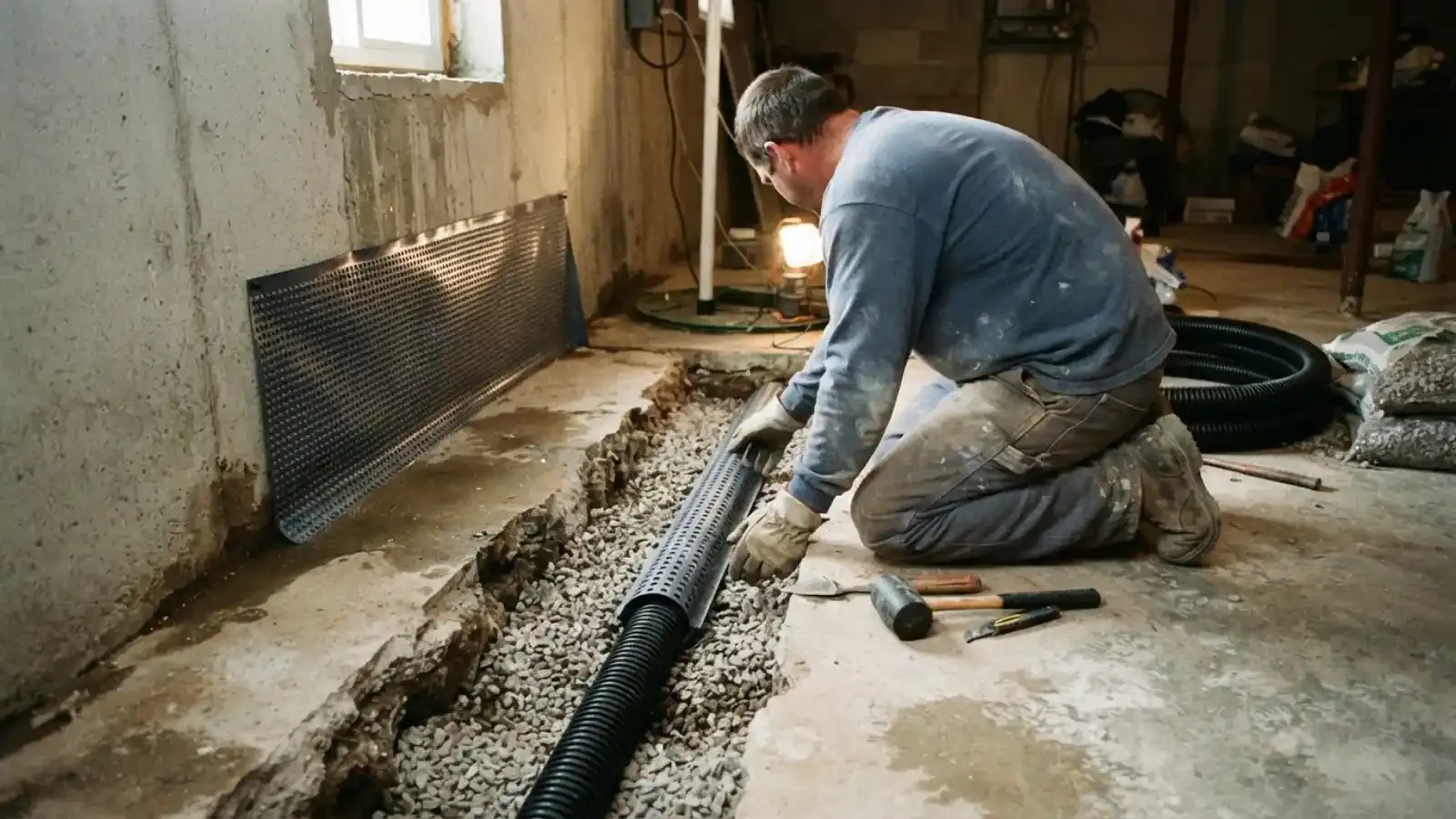
An interior drain cuts a channel along the wall, lays perforated pipe in gravel and carries water to a sump. It relieves pressure under the floor and keeps the basement dry even when the water table rises.
It is more costly, so it should come after the cheaper steps unless the water is severe.
Where Not to Spend
Paint-only fixes for active leaks
They peel within a season.
Exterior excavation without a diagnosis
It is the most expensive option.
Fear-based sales pitches
Ask for a written diagnosis and options.
We help in Chaska, Carver and Waconia. If a pump is failing, see sump pump repair, and for a full system, basement waterproofing explains the options.
Groundwater, the River and the Rules in Chaska
Chaska sits close to the Minnesota River, and Highway 41 toward Shakopee has closed at times for river flooding. Spring thaw plus rain loads the soil around foundations with water.
The City of Chaska says water from groundwater sump pumps cannot be pumped into the sanitary sewer, so plan an outdoor discharge before you install a pump.
Source: City of Chaska sanitary sewer guidance and regional flood reports.
Questions Chaska Homeowners Ask
Fix gutters, downspouts and grading first. They cost little and solve many cases.
It helps with dampness, not with active water pressure.
Tape foil to the wall for a day. Moisture on the outside means condensation, and on the wall side means seepage.
Only if water can reach it through drain tile or a pit.
Typical US prices commonly run from about $3,000 to $10,000 or more, depending on length.
No. It cannot go into the sanitary sewer.